命令行接口 (CLI)
🌐 Command Line Interface (CLI)
Page summary:Strapi 带有功能齐全的命令行接口(CLI),使你可以在几秒钟内搭建和管理项目。CLI 可与
yarn和npm包管理器一起使用。🌐 Strapi comes with a full featured Command Line Interface (CLI) which lets you scaffold and manage your project in seconds. The CLI works with both the
yarnandnpmpackage managers.
本页上的 Strapi CLI 命令按类别分组:
🌐 Strapi CLI commands on the present page are grouped by category:
| 类别 | 命令 |
|---|---|
| 开发 | develop, start, build, console |
| 云 | login, link, deploy, logout |
| 数据管理 | export, import, transfer |
| 项目信息 | report, telemetry:disable, telemetry:enable, version, help |
| 配置 | configuration:dump, configuration:restore |
| 管理 | admin:create-user, admin:reset-user-password, admin:list-users, admin:active-user, admin:block-user, admin:delete-user |
| 代码生成 | generate, openapi generate, templates:generate, ts:generate-types |
| 列表 | routes:list, policies:list, middlewares:list, content-types:list, hooks:list, controllers:list, services:list |
像 strapi admin:create-user 这样的交互命令在使用 npm 时不会显示提示。请考虑使用 yarn 包管理器。
🌐 Interactive commands such as strapi admin:create-user don't display prompts with npm. Please consider using the yarn package manager.
一般考虑
🌐 General considerations
建议仅在本地安装 Strapi,这需要在所有以下 strapi 命令前加上用于项目设置的包管理器(例如 npm run strapi help 或 yarn strapi help)或专用的 node 包执行器(例如 npx strapi help)。
🌐 It is recommended to install Strapi locally only, which requires prefixing all of the following strapi commands with the package manager used for the project setup (e.g npm run strapi help or yarn strapi help) or a dedicated node package executor (e.g. npx strapi help).
- 要使用
npm传递选项,请使用以下语法:
npm run strapi <command> -- --<option>。 - 要使用
yarn传递选项,请使用以下语法:
yarn strapi <command> --<option>
ℹ️ Strapi v4 CLI 命令已从 Strapi 5 中移除:
Strapi v4 的 strapi install、strapi uninstall、strapi new 和 strapi watch-admin 命令在 Strapi 5 中已被移除:
🌐 The strapi install, strapi uninstall, strapi new, and strapi watch-admin commands from Strapi v4 have been removed in Strapi 5:
| Strapi v4 命令 | Strapi 5 对应命令 |
|---|---|
strapi install [plugin] | 使用对应插件的 npx 命令(可在市场中找到,见 Marketplace) |
strapi new | 使用相应的 yarn 或 npx 命令来创建新的 Strapi 项目(见 CLI 安装指南) |
strapi watch-admin | yarn develop 或 npm run develop 总是在“watch-admin”模式下启动 Strapi 服务器。要在 Strapi 5 中禁用此功能,请运行 yarn develop --no-watch-admin 或 npm run develop --no-watch-admin。 |
新项目的安全默认设置
🌐 Security defaults for new projects
使用 create-strapi-app 搭建的项目在生成的 config/ 文件和 .env 中包含预配置的安全加固默认设置:
🌐 Projects scaffolded with create-strapi-app include security-hardened defaults pre-configured in the generated config/ files and .env:
| 默认 | 配置位置 | 目的 |
|---|---|---|
rest.strictParams: true 和 documents.strictParams: true | config/api.* | 拒绝带有未知查询或正文参数的请求(请参见 API 配置)。 |
jwtManagement: 'refresh' 与 sessions.httpOnly: true | config/plugins.*(用户-权限) | 启用基于刷新令牌的身份验证,使用 HTTP-only 会话 Cookie,用于用户与权限功能(参见 用户与权限)。 |
upload.config.security.allowedTypes 和 upload.config.security.deniedTypes | config/plugins.*(上传) | 限制上传到批准的文件类型并阻止危险的扩展名(参见 媒体库)。 |
webhooks.populateRelations: false | config/server.* | 防止关系数据包含在 webhook 有效负载中(参见服务器配置)。 |
JWT_SECRET | .env | 随机生成的秘密包含在脚手架的 .env 文件中。 |
所有默认设置都可以在相应的配置文件中进行调整,以符合你项目的需求。
🌐 All defaults can be adjusted in the corresponding configuration files to match your project's requirements.
发展
🌐 Development
这些命令在开发过程中启动并构建你的 Strapi 应用。
🌐 These commands start and build your Strapi application during development.
strapi develop
别名: dev
启动一个启用自动重新加载的 Strapi 应用。
🌐 Start a Strapi application with auto-reloading enabled.
Strapi 在运行时会修改/创建文件,并且在创建新文件时需要重启。为实现这一点,strapi develop 添加了一个文件监视器,并在必要时重启应用。
🌐 Strapi modifies/creates files at runtime and needs to restart when new files are created. To achieve this, strapi develop adds a file watcher and restarts the application when necessary.
Strapi 还添加了中间件来支持管理面板的 HMR(热模块替换)。这使你可以在无需重启应用或运行单独服务器的情况下自定义管理面板。
🌐 Strapi also adds middlewares to support HMR (Hot Module Replacement) for the administration panel. This allows you to customize the administration panel without having to restart the application or run a separate server.
strapi develop
options: [--bundler | --open | --no-watch-admin | --no-build-admin | --polling | --debug | --silent]
- strapi develop --bundler [bundler]
选择用于管理面板构建的打包器(vite或webpack)。 - strapi develop --open
启动你的应用并启用自动重载,同时用默认浏览器打开正在运行的管理面板。 - strapi develop --no-watch-admin
当对管理员面板代码进行更改时,防止服务器自动重载。 - strapi develop --no-build-admin
当启用--no-watch-admin时,防止构建管理员面板。 - strapi develop --polling
监视网络目录中的文件更改。 - strapi develop --debug
启用带有详细日志的调试模式。 - strapi develop --silent
抑制日志。 - strapi develop --install-deps
自动安装缺失的管理员同伴依赖 (react,react-dom,react-router-dom,styled-components)。此功能默认启用。 - strapi develop --no-install-deps
跳过自动安装缺失的管理员同级依赖,如果有任何缺失将立即失败。
你永远不应该使用此命令在生产环境中运行 Strapi 应用。
🌐 You should never use this command to run a Strapi application in production.
strapi start
启动一个禁用自动重新加载的 Strapi 应用。
🌐 Start a Strapi application with auto-reloading disabled.
此命令用于在不重启和不写入文件的情况下运行 Strapi 应用,主要用于生产环境。
某些功能,例如内容类型构建器,在 strapi start 模式下被禁用,因为它们需要应用重启。start 命令可以通过在前面添加 环境变量 来自定义应用启动。
🌐 This command is to run a Strapi application without restarts and file writes, primarily for use in production.
Certain features such as the Content-type Builder are disabled in the strapi start mode because they require application restarts. The start command can be prefaced with environment variables to customize the application start.
strapi build
构建你的管理员面板。
🌐 Builds your admin panel.
strapi build
| 选项 | 类型 | 描述 |
|---|---|---|
-d, --debug | - | 启用带详细日志的调试模式(默认:false) |
--minify | - | 压缩输出(默认:true) |
--no-optimization | - | [已弃用]:请改用压缩功能 |
--silent | - | 不记录任何日志(默认:false) |
--sourcemaps | - | 生成 source map(默认:false) |
--stats | - | 将构建统计输出到控制台(默认:false) |
--install-deps | - | 自动安装缺失的管理员依赖(默认:false) |
--no-install-deps | - | 跳过自动安装,如果依赖缺失则失败(默认:true) |
strapi console
启动服务器并实时执行应用中的命令。
🌐 Start the server and evaluate commands in your application in real time.
strapi console
console 命令会编译并加载你的应用,在后台启动服务器,然后打开一个 Node.js REPL。REPL 提供基于你应用名称的提示符,并通过全局 strapi 对象访问所有 Strapi API。通过连续按 Ctrl-C 两次关闭 REPL 可以优雅地停止服务器。
可用的助手
🌐 Available helpers
strapi 对象提供以下 getter 和方法来与你的应用进行交互:
🌐 The strapi object exposes the following getters and methods to interact with your application:
-
strapi.services和strapi.service(uid)使用 服务 -
strapi.controllers和strapi.controller(uid)调用 控制器 -
strapi.contentTypes和strapi.contentType(uid)检查 内容类型 -
strapi.components列出组件 -
strapi.policies和strapi.policy(name)用于 政策 -
strapi.middlewares和strapi.middleware(name)用于 中间件 -
strapi.plugins和strapi.plugin(name)用于插件 -
strapi.hooks和strapi.hook(name)用于钩子 -
strapi.apis和strapi.api(name)用于 API -
strapi.db通过 查询引擎 API 直接查询数据库,例如如下所示:await strapi.db.query('api::article.article').findMany();
使用此环境测试代码并检查你的项目,并直接访问所有 Strapi API。
🌐 Use this environment to test code and inspect your project with direct access to all Strapi APIs.
Strapi 使用 Node.js 的一个名为 AsyncLocalStorage 的功能来使上下文在任何地方都可用。
云
🌐 Cloud
这些命令与 Strapi Cloud 交互。有关详细信息,请参阅 Cloud CLI 文档。
🌐 These commands interact with Strapi Cloud. See the Cloud CLI documentation for details.
strapi login
登录到 Strapi Cloud(请参阅 Cloud CLI 文档)。
🌐 Logs in to Strapi Cloud (see Cloud CLI documentation).
strapi link
将本地项目链接到现有的 Strapi Cloud 项目(参见 Cloud CLI 文档)。
🌐 Links the local project to an existing Strapi Cloud project (see Cloud CLI documentation).
strapi deploy
将关联的本地项目部署到 Strapi 云(参见 Cloud CLI 文档)。
🌐 Deploys a linked local project to Strapi Cloud (see Cloud CLI documentation).
strapi logout
从 Strapi Cloud 登出(参见 Cloud CLI 文档)。
🌐 Logs out from Strapi Cloud (see Cloud CLI documentation).
数据管理
🌐 Data management
这些命令用于在 Strapi 实例之间导出、导入和传输数据。
🌐 These commands export, import, and transfer data between Strapi instances.
strapi export
导出你的项目数据。默认设置会创建一个 .tar 文件,使用 gzip 压缩并使用 aes-128-ecb 加密。
strapi export
该归档包含如 configuration、entities、links 和 schemas 的文件夹,数据存储在 JSON lines 文件中。使用 --no-encrypt --no-compress 生成可读取的 .tar,可以进行检查或转换为其他格式。
导出的文件会自动使用格式 export_YYYYMMDDHHMMSS,并带有当前日期和时间戳进行命名。或者,你可以使用 -f 或 --file 标志来指定文件名。下表提供了所有可用的命令行标志选项:
🌐 The exported file is automatically named using the format export_YYYYMMDDHHMMSS with the current date and timestamp. Alternately, you can specify the filename using the -f or --file flag. The following table provides all of the available options as command line flags:
| 选项 | 类型 | 描述 |
|---|---|---|
--no-encrypt | - | 禁用文件加密,并禁用 key 选项。 |
--no-compress | - | 禁用文件压缩。 |
-k, --key | 字符串 | 通过 export 命令传递加密密钥。 --key 选项不能与 --no-encrypt 组合使用。 |
-f, --file | 字符串 | 指定导出文件名(tar)或输出目录路径(dir)。tar 导出不要包括文件扩展名。 |
--format | 字符串 | 导出格式:tar(默认)或 dir。目录导出需要 --no-encrypt。 |
--exclude | 字符串 | 使用逗号分隔的数据类型排除数据。可用类型有:content、files 和 config。 |
--only | 字符串 | 仅包含这些数据。可用类型有:content、files 和 config。 |
-h, --help | - | 显示 strapi export 命令的帮助信息。 |
示例
使用自定义文件名导出数据(myData.tar.gz.enc):
🌐 Export data with a custom filename (myData.tar.gz.enc):
strapi export -f myData
导出数据而不加密:
🌐 Export data without encryption:
strapi export --no-encrypt
将数据导出为未打包的目录:
🌐 Export data as an unpacked directory:
strapi export --format dir --no-encrypt -f my-export
strapi import
将数据导入到你的项目中。导入的数据必须来自另一个 Strapi 应用。你必须传递 --file 选项以指定导入操作的文件或目录。
strapi import
该命令接受由 strapi export(.tar、.tar.gz、.tar.gz.enc)生成的归档文件以及已解压的导出目录。对于归档导入,压缩和加密会从文件名中检测。当 -f 指向一个目录时,压缩和加密将自动跳过。
🌐 The command accepts archives generated by strapi export (.tar, .tar.gz, .tar.gz.enc) and unpacked export directories. Compression and encryption are detected from the filename for archive imports. When -f points to a directory, encryption and compression are skipped automatically.
| 选项 | 类型 | 描述 |
|---|---|---|
-k, --key | 字符串 | 在命令中提供加密密钥,而不是在随后提示时输入。 |
-f, --file | 字符串 | 指向 .tar[.gz][.enc] 存档文件的路径或解压后的导出目录。 |
-h, --help | - | 显示 strapi import 帮助命令。 |
示例
导入数据并传递加密密钥:
🌐 Import data and pass an encryption key:
strapi import -f your-filepath-and-filename --key my-key
从未打包的导出目录导入:
🌐 Import from an unpacked export directory:
strapi import -f ./my-export
strapi transfer
在两个 Strapi 实例之间传输数据。此命令主要用于本地实例与远程实例之间或两个远程实例之间。transfer 命令需要一个传输令牌,该令牌可在目标实例的管理面板中生成。有关创建传输令牌的详细文档,请参阅用户指南。
目标 Strapi 实例应该使用 start 命令运行,而不是 develop 命令。
🌐 The destination Strapi instance should be running with the start command and not the develop command.
| 选项 | 描述 |
|---|---|
--to [destinationURL] | 目标 Strapi 实例上 /admin 端点的完整 URL(例如: --to https://my-beautiful-strapi-website/admin) |
--to-token [transferToken] | 远程 Strapi 目标的传输令牌 |
--from [sourceURL] | 远程 Strapi 实例的 /admin 端点的完整 URL,用于拉取数据(例如: --from https://my-beautiful-strapi-website/admin) |
‑‑from‑token | 来自 Strapi 源实例的传输令牌 |
--force | 对所有提示自动回答“是”,包括可能破坏性的请求,并非交互式运行 |
--exclude | 使用逗号分隔的数据类型排除数据。可用类型包括: content、files 和 config |
--only | 仅包含这些数据。可用类型包括: content、files 和 config |
-h、--help | 显示 strapi transfer 的命令 |
需要 --to 或 --from,但目前不允许同时输入两者或两者都不输入。
🌐 Either --to or --from is required, but it's not currently allowed to enter both or neither.
示例
strapi transfer --to http://example.com/admin --to-token my-transfer-token
项目信息
🌐 Project information
这些命令用于显示项目详情、管理遥测,并显示已安装的版本。
🌐 These commands display project details, manage telemetry, and show the installed version.
strapi report
打印出对调试有用且报告问题时所需的调试信息。
🌐 Prints out debug information useful for debugging and required when reporting an issue.
| 选项 | 描述 |
|---|---|
-u,--uuid | 包含项目 UUID |
-d,--dependencies | 包含项目依赖 |
--all | 记录所有数据 |
示例
要在输出中包含项目 UUID 和依赖:
🌐 To include the project UUID and dependencies in the output:
strapi report --uuid --dependencies
要记录所有内容,请使用 --all 选项:
🌐 To log everything, use the --all option:
strapi report --all
strapi telemetry:disable
禁用该项目的数据收集(请参阅 使用信息)。
🌐 Disable data collection for the project (see Usage Information).
strapi telemetry:disable
strapi telemetry:enable
在项目被禁用后重新启用数据收集(见使用信息)。
🌐 Re-enable data collection for the project after it was disabled (see Usage Information).
strapi telemetry:enable
strapi version
打印当前安装的 Strapi 版本。 如果该命令是全局安装的 Strapi,则会输出当前全局安装的版本;如果从包含 Strapi 项目的指定文件夹运行该命令,则会输出该 Strapi 项目中的当前版本。
🌐 Print the currently installed Strapi version. It will output the current globally installed version if this command is strapi is installed globally, or the current version of Strapi within a Strapi project if the command is run from a given folder containing a Strapi project.
strapi version
strapi help
列出 CLI 命令。
🌐 List CLI commands.
strapi help
配置
🌐 Configuration
这些命令用于导出和恢复应用存储的配置。
🌐 These commands dump and restore your application's stored configuration.
strapi configuration:dump
别名: config:dump
将配置转储到文件或标准输出以帮助你迁移到生产环境。
🌐 Dumps configurations to a file or stdout to help you migrate to production.
转储格式将是 JSON 数组。
🌐 The dump format will be a JSON array.
Options:
  -f, --file <file>  Output file, default output is stdout
  -p, --pretty       Format the output JSON with indentation and line breaks (default: false)
示例
strapi configuration:dump -f dump.jsonstrapi config:dump --file dump.jsonstrapi config:dump > dump.json
所有这些例子都是等价的。
🌐 All these examples are equivalent.
在配置你的应用时,你通常需要输入第三方服务(例如身份验证提供者)的凭据。请注意,这些凭据也会被输出到此命令的输出中。如果有疑问,你应避免将转储文件提交到版本控制系统中。以下是一些你可以探索的方法:
🌐 When configuring your application you often enter credentials for third party services (e.g authentication providers). Be aware that those credentials will also be dumped into the output of this command. In case of doubt, you should avoid committing the dump file into a versioning system. Here are some methods you can explore:
- 将文件直接复制到所需的环境并在那里运行恢复命令。
- 将文件放在安全位置,并在部署时使用正确的凭据下载它。
- 在提交之前对文件进行加密,并在运行恢复命令时对其进行解密。
strapi configuration:restore
别名: config:restore
将配置转储恢复到你的应用中。
🌐 Restores a configuration dump into your application.
输入格式必须是 JSON 数组。
🌐 The input format must be a JSON array.
strapi configuration:restore

Options:
  -f, --file <file>          Input file, default input is stdin
  -s, --strategy <strategy>  Strategy name, one of: "replace", "merge", "keep". Defaults to: "replace"
示例
strapi configuration:restore -f dump.jsonstrapi config:restore --file dump.json -s replacecat dump.json | strapi config:restorestrapi config:restore < dump.json
所有这些例子都是等价的。
🌐 All these examples are equivalent.
策略
运行恢复命令时,你可以选择三种不同的策略:
🌐 When running the restore command, you can choose from three different strategies:
- 替换:将创建缺失的键并替换现有的键。
- 合并:将创建缺失的键,并将现有键与其新值合并。
- 保留:将创建缺失的键,并保持现有键不变。
管理
🌐 Administration
这些命令用于管理 Strapi 管理面板的管理员账户。
🌐 These commands manage administrator accounts for the Strapi admin panel.
strapi admin:create-user
别名 admin:create
创建一个管理员。管理员的名字、姓氏、电子邮件和密码可以是:
🌐 Creates an administrator. Administrator's first name, last name, email, and password can be:
- 作为选项传递
- 或者如果你调用命令而不传递任何选项,则以交互方式设置。
示例
strapi admin:create-user --firstname=Kai --lastname=Doe --email=chef@strapi.io --password=Gourmet1234
选项
| 选项 | 类型 | 描述 | 是否必填 |
|---|---|---|---|
| -f, --firstname | 字符串 | 管理员的名字 | 是 |
| -l, --lastname | 字符串 | 管理员的姓氏 | 否 |
| -e, --email | 字符串 | 管理员的电子邮件 | 是 |
| -p, --password | 字符串 | 管理员的新密码 | 否 |
| -h, --help | 显示命令帮助 | 否 |
strapi admin:reset-user-password
别名 admin:reset-password
重置管理员用户的密码。 你可以将电子邮件和新密码作为选项传递,或者如果在不传递选项的情况下调用命令,则可以交互式设置它们。
🌐 Reset an admin user's password. You can pass the email and new password as options or set them interactively if you call the command without passing the options.
示例
strapi admin:reset-user-password --email=chef@strapi.io --password=Gourmet1234
选项
| 选项 | 类型 | 描述 |
|---|---|---|
| -e, --email | 字符串 | 用户邮箱 |
| -p, --password | 字符串 | 用户的新密码 |
| -h, --help | 显示命令帮助 |
strapi admin:list-users
别名 admin:list
显示一个表格,列出所有管理员账户,包括他们的ID、电子邮件、名字和姓氏、活跃状态、被阻止状态以及分配的角色。
🌐 Displays a table listing all administrator accounts, including their ID, email, first and last name, active status, blocked status, and assigned roles.
strapi admin:list-users
strapi admin:active-user
别名 admin:active
设置管理员账户的活动状态。电子邮件和活动状态可以作为选项传递,或者如果在没有选项的情况下调用命令,也可以交互式提供。
🌐 Sets the active status of an administrator account. The email and active status can be passed as options or provided interactively if you call the command without options.
示例
strapi admin:active-user --email=chef@strapi.io --active=true
选项
| 选项 | 类型 | 描述 | 必填 |
|---|---|---|---|
| -e, --email | 字符串 | 管理员的电子邮件 | 是 |
| -a, --active | 字符串 | 要设置的激活状态(true 或 false) | 是 |
| -h, --help | 显示命令帮助 | 否 |
strapi admin:block-user
别名 admin:block
设置管理员账户的阻止状态。电子邮件和阻止状态可以作为选项传递,或者如果在不使用选项的情况下调用命令,则可以交互式提供。
🌐 Sets the blocked status of an administrator account. The email and block status can be passed as options or provided interactively if you call the command without options.
示例
strapi admin:block-user --email=chef@strapi.io --block=true
选项
| 选项 | 类型 | 描述 | 必填 |
|---|---|---|---|
| -e, --email | 字符串 | 管理员的电子邮件 | 是 |
| -b, --block | 字符串 | 要设置的阻止状态(true 或 false) | 是 |
| -h, --help | 显示命令帮助 | 否 |
strapi admin:delete-user
别名 admin:delete
删除一个现有的管理员账户。电子邮件可以作为选项传递,或者如果在没有选项的情况下调用命令,可以交互式提供。在删除之前会显示交互式确认提示。
🌐 Deletes an existing administrator account. The email can be passed as an option or provided interactively if you call the command without options. An interactive confirmation prompt is shown before deletion.
示例
strapi admin:delete-user --email=chef@strapi.io
选项
| 选项 | 类型 | 描述 | 必填 |
|---|---|---|---|
| -e, --email | 字符串 | 管理员的电子邮件 | 是 |
| -h, --help | 显示命令帮助 | 否 |
代码生成
🌐 Code generation
这些命令用于搭建 API、内容类型和其他项目文件。
🌐 These commands scaffold APIs, content-types, and other project files.
strapi generate
生成 APIs、控制器、内容类型、策略、中间件、服务 和 迁移。
🌐 Generate APIs, controllers, content-types, policies, middlewares, services, and migrations.
strapi generate
该命令显示一个交互式菜单,其中包含以下选项:
🌐 The command displays an interactive menu with the following options:
- api - 生成一个带有控制器和服务的新 API
- 控制器 - 生成一个新的控制器
- 内容类型 - 使用模式生成新的内容类型
- 政策 - 生成一项新政策
- 中间件 - 生成一个新的中间件
- 迁移 - 生成一个新的数据库迁移
- 服务 - 生成一个新的服务
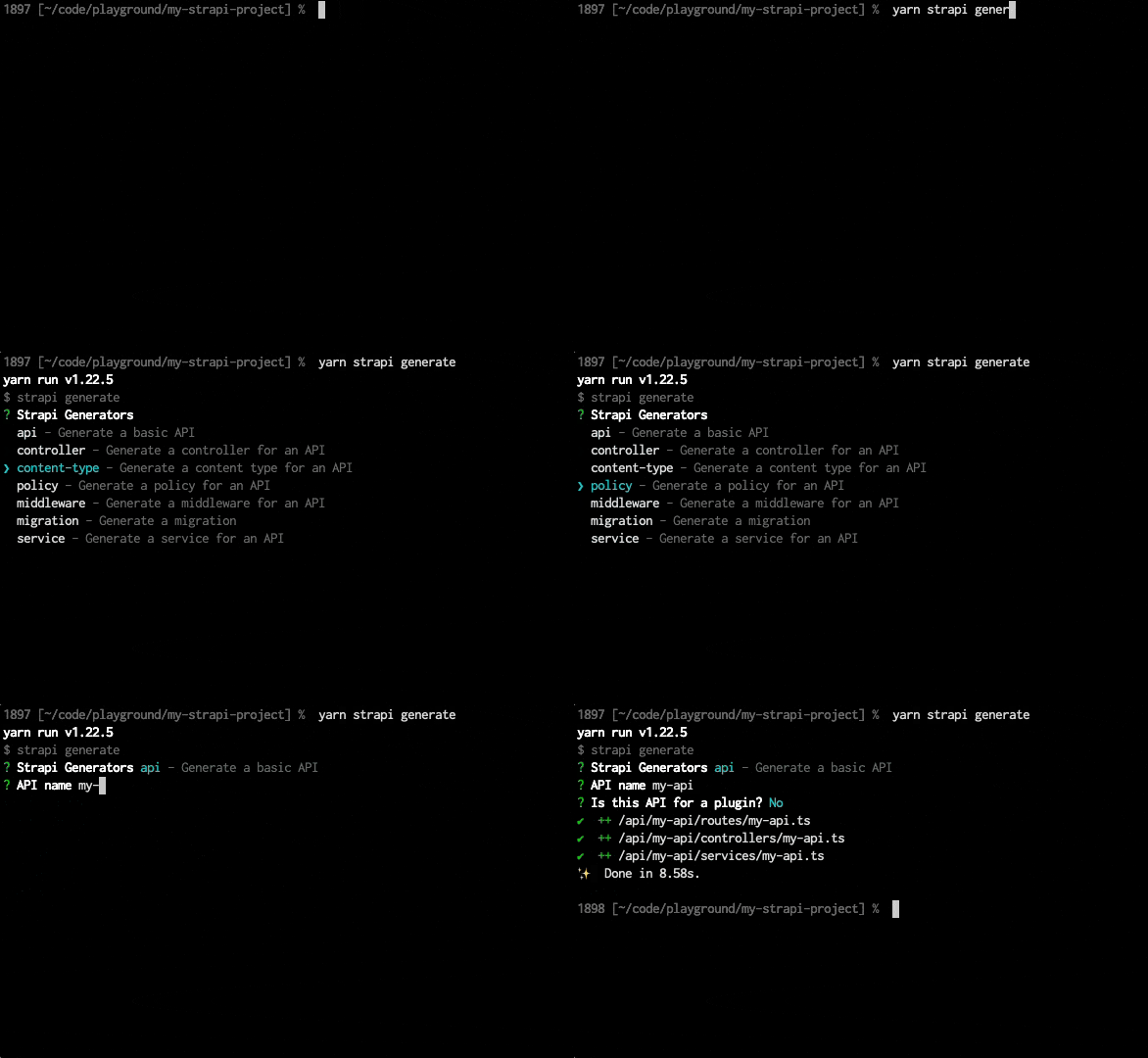
生成器会自动检测 TypeScript 或 JavaScript,并创建带有正确扩展名的文件(.ts 或 .js)。
生成的文件包含带注释的示例。单数和复数名称必须不同,并使用 kebab-case 格式 。
strapi openapi generate
为你的 Strapi 应用生成 OpenAPI 规范。
strapi openapi generate
| 选项 | 类型 | 默认值 | 描述 |
|---|---|---|---|
--output | string | ./openapi-spec.json | 生成的规范文件的输出路径 |
例子
🌐 Examples
- Yarn
- NPM
# Generate OpenAPI specification (default)
yarn strapi openapi generate

# Generate with custom output path
yarn strapi openapi generate --output ./docs/api-spec.json
# Generate OpenAPI specification (default)
npm run strapi openapi generate

# Generate with custom output path
npm run strapi openapi generate -- --output ./docs/api-spec.json
strapi templates:generate
从当前 Strapi 项目创建模板。
🌐 Create a template from the current Strapi project.
strapi templates:generate <path>
-
strapi templates:generate <路径>
在<path>生成一个 Strapi 模板示例:
strapi templates:generate ../strapi-template-name将会把所需的文件和文件夹复制到../strapi-template-name内的template目录
strapi ts:generate-types
为项目模式生成 TypeScript 类型定义。
🌐 Generate TypeScript typings for the project schemas.
strapi ts:generate-types
- strapi ts:generate-types --debug
在启用调试模式的情况下生成类型,显示生成的模式的详细表格。 - strapi ts:generate-types --silent 或 strapi ts:generate-types -s
在启用静默模式下生成类型,完全移除终端中的所有日志。不能与debug结合使用 - strapi ts:generate-types --out-dir <path> 或 strapi ts:generate-types -o <path>
生成类型定义,指定将创建文件的输出目录。
Strapi 需要在 types 目录中生成项目类型才能正常工作。在大多数情况下,不应使用 --out-dir 选项。不过,在某些情况下,它可能很有用,例如在更改内容结构后生成第二个副本以比较现有类型和更新类型之间的差异。
🌐 Strapi requires the project types to be generated in the types directory for them to work. The --out-dir option should not be used for most cases. However, it can be useful for cases such as generating a second copy to compare the difference between your existing and updated types after changing your content structure.
列表
🌐 Listing
这些命令会列出你 Strapi 项目中已注册的元素。
🌐 These commands list registered elements in your Strapi project.
strapi routes:list
显示所有可用的路线列表。
🌐 Display a list of all the available routes.
strapi routes:list
strapi policies:list
显示所有已注册的策略列表。
🌐 Display a list of all the registered policies.
strapi policies:list
strapi middlewares:list
显示所有注册的 中间件 列表。
🌐 Display a list of all the registered middlewares.
strapi middlewares:list
strapi content-types:list
显示所有现有的 内容类型 列表。
🌐 Display a list of all the existing content-types.
strapi content-types:list
strapi hooks:list
显示所有可用钩子的列表。
🌐 Display a list of all the available hooks.
strapi hooks:list
strapi controllers:list
显示所有注册的控制器列表。
🌐 Display a list of all the registered controllers.
strapi controllers:list
strapi services:list
显示所有注册的服务列表。
🌐 Display a list of all the registered services.
strapi services:list