文档服务 API:中间件
🌐 Document Service API: Middlewares
Page summary:文档服务中间件允许你在文档服务方法运行之前和之后执行操作,通过
strapi.documents.use()注册中间件函数,并可以访问内容类型上下文和方法参数。🌐 Document Service middlewares allow you to perform actions before and after Document Service methods run by registering middleware functions via
strapi.documents.use()with access to content type context and method parameters.
文档服务 API 提供了通过中间件扩展其行为的能力。
🌐 The Document Service API offers the ability to extend its behavior thanks to middlewares.
文档服务中间件允许你在方法运行之前和/或之后执行操作。
🌐 Document Service middlewares allow you to perform actions before and/or after a method runs.
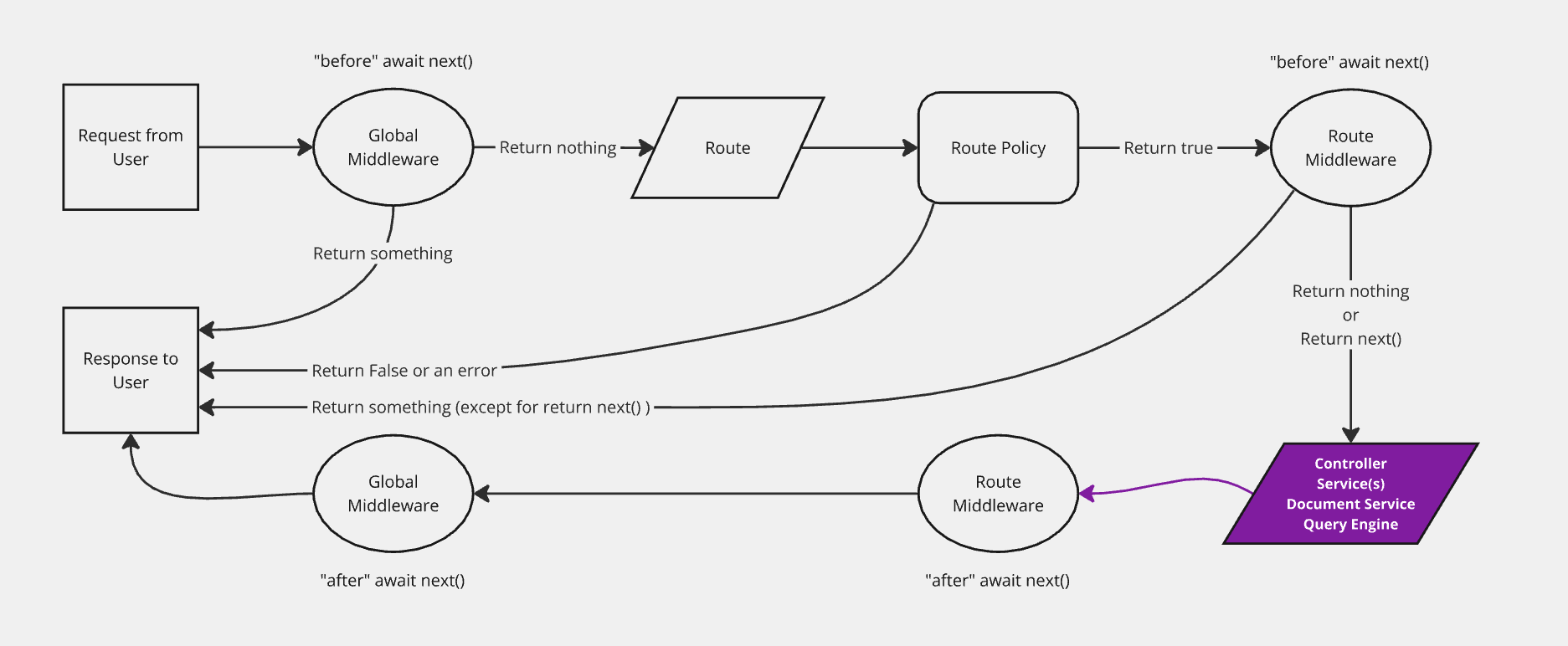
注册中间件
🌐 Registering a middleware
语法:strapi.documents.use(middleware)
🌐 Syntax: strapi.documents.use(middleware)
参数
🌐 Parameters
中间件是一种接收上下文和下一个函数的函数。
🌐 A middleware is a function that receives a context and a next function.
语法:(context, next) => ReturnType<typeof next>
🌐 Syntax: (context, next) => ReturnType<typeof next>
| 参数 | 描述 | 类型 |
|---|---|---|
context | 中间件上下文 | Context |
next | 调用堆栈中的下一个中间件 | function |
context
| 参数 | 描述 | 类型 |
|---|---|---|
action | 正在运行的方法(查看可用方法) | string |
params | 方法参数(查看可用方法) | Object |
uid | 内容类型唯一标识 | string |
contentType | 内容类型 | ContentType |
示例:
以下示例显示了根据调用的方法,context 可能包含的内容:
🌐 The following examples show what context might include depending on the method called:
- findOne
- findMany
- create
- update
- delete
{
  uid: "api::restaurant.restaurant",
  contentType: {
    kind: "collectionType",
    collectionName: "restaurants",
    info: {
      singularName: "restaurant",
      pluralName: "restaurants",
      displayName: "restaurant"
    },
    options: {
      draftAndPublish: true
    },
    pluginOptions: {},
    attributes: {
      name: { /*...*/ },
      description: { /*...*/ },
      createdAt: { /*...*/ },
      updatedAt: { /*...*/ },
      publishedAt: { /*...*/ },
      createdBy: { /*...*/ },
      updatedBy: { /*...*/ },
      locale: { /*...*/ },
    },
    apiName: "restaurant",
    globalId: "Restaurants",
    uid: "api::restaurant.restaurant",
    modelType: "contentType",
    modelName: "restaurant",
    actions: { /*...*/ },
    lifecycles: { /*...*/ },
  },
  action: "findOne",
  params: {
    documentId: 'hp7hjvrbt8rcgkmabntu0aoq',
    locale: undefined,
    status: "publish"
    populate: { /*...*/ },
  }
}
{
  uid: "api::restaurant.restaurant",
  contentType: {
    kind: "collectionType",
    collectionName: "restaurants",
    info: {
      singularName: "restaurant",
      pluralName: "restaurants",
      displayName: "restaurant"
    },
    options: {
      draftAndPublish: true
    },
    pluginOptions: {},
    attributes: {
      name: { /*...*/ },
      description: { /*...*/ },
      createdAt: { /*...*/ },
      updatedAt: { /*...*/ },
      publishedAt: { /*...*/ },
      createdBy: { /*...*/ },
      updatedBy: { /*...*/ },
      locale: { /*...*/ },
    },
    apiName: "restaurant",
    globalId: "Restaurants",
    uid: "api::restaurant.restaurant",
    modelType: "contentType",
    modelName: "restaurant",
    actions: { /*...*/ },
    lifecycles: { /*...*/ },
  },
  action: "findMany",
  params: {
    filters: { /*...*/ },
    status: "draft",
    locale: null,
    fields: ['name', 'description'],
  }
}
{
  uid: "api::restaurant.restaurant",
  contentType: {
    kind: "collectionType",
    collectionName: "restaurants",
    info: {
      singularName: "restaurant",
      pluralName: "restaurants",
      displayName: "restaurant"
    },
    options: {
      draftAndPublish: true
    },
    pluginOptions: {},
    attributes: {
      name: { /*...*/ },
      description: { /*...*/ },
      createdAt: { /*...*/ },
      updatedAt: { /*...*/ },
      publishedAt: { /*...*/ },
      createdBy: { /*...*/ },
      updatedBy: { /*...*/ },
      locale: { /*...*/ },
    },
    apiName: "restaurant",
    globalId: "Restaurants",
    uid: "api::restaurant.restaurant",
    modelType: "contentType",
    modelName: "restaurant",
    actions: { /*...*/ },
    lifecycles: { /*...*/ },
  },
  action: "create",
  params: {
    data: { /*...*/ },
    status: "draft",
    populate: { /*...*/ },
  }
}
{
  uid: "api::restaurant.restaurant",
  contentType: {
    kind: "collectionType",
    collectionName: "restaurants",
    info: {
      singularName: "restaurant",
      pluralName: "restaurants",
      displayName: "restaurant"
    },
    options: {
      draftAndPublish: true
    },
    pluginOptions: {},
    attributes: {
      name: { /*...*/ },
      description: { /*...*/ },
      createdAt: { /*...*/ },
      updatedAt: { /*...*/ },
      publishedAt: { /*...*/ },
      createdBy: { /*...*/ },
      updatedBy: { /*...*/ },
      locale: { /*...*/ },
    },
    apiName: "restaurant",
    globalId: "Restaurants",
    uid: "api::restaurant.restaurant",
    modelType: "contentType",
    modelName: "restaurant",
    actions: { /*...*/ },
    lifecycles: { /*...*/ },
  },
  action: "update",
  params: {
    data: { /*...*/ },
    documentId: 'hp7hjvrbt8rcgkmabntu0aoq',
    locale: undefined,
    status: "draft"
    populate: { /*...*/ },
  }
}
{
  uid: "api::restaurant.restaurant",
  contentType: {
    kind: "collectionType",
    collectionName: "restaurants",
    info: {
      singularName: "restaurant",
      pluralName: "restaurants",
      displayName: "restaurant"
    },
    options: {
      draftAndPublish: true
    },
    pluginOptions: {},
    attributes: {
      name: { /*...*/ },
      description: { /*...*/ },
      createdAt: { /*...*/ },
      updatedAt: { /*...*/ },
      publishedAt: { /*...*/ },
      createdBy: { /*...*/ },
      updatedBy: { /*...*/ },
      locale: { /*...*/ },
    },
    apiName: "restaurant",
    globalId: "Restaurants",
    uid: "api::restaurant.restaurant",
    modelType: "contentType",
    modelName: "restaurant",
    actions: { /*...*/ },
    lifecycles: { /*...*/ },
  },
  action: "delete",
  params: {
    data: { /*...*/ },
    documentId: 'hp7hjvrbt8rcgkmabntu0aoq',
    locale: "*",
    populate: { /*...*/ },
  }
}
next
next 是一个没有参数的函数,它调用堆栈中的下一个中间件并返回其响应。
示例
strapi.documents.use((context, next) => {
  return next();
});
在哪里注册
🌐 Where to register
一般来说,你应该在 Strapi 注册阶段注册你的中间件。
🌐 Generaly speaking you should register your middlewares during the Strapi registration phase.
用户
🌐 Users
中间件必须在通用的 register() 生命周期方法中注册:
🌐 The middleware must be registered in the general register() lifecycle method:
module.exports = {
  register({ strapi }) {
    strapi.documents.use((context, next) => {
      // your logic
      return next();
    });
  },

  // bootstrap({ strapi }) {},
  // destroy({ strapi }) {},
};
插件开发者
🌐 Plugin developers
中间件必须在插件的 register() 生命周期方法中注册:
🌐 The middleware must be registered in the plugin's register() lifecycle method:
module.exports = {
  register({ strapi }) {
    strapi.documents.use((context, next) => {
      // your logic
      return next();
    });
  },

  // bootstrap({ strapi }) {},
  // destroy({ strapi }) {},
};
实现中间件
🌐 Implementing a middleware
在实现中间件时,总是要返回来自 next() 的响应。
如果不这样做,将会导致 Strapi 应用出错。
🌐 When implementing a middleware, always return the response from next().
Failing to do this will break the Strapi application.
例子
🌐 Examples
const applyTo = ['api::article.article'];

strapi.documents.use((context, next) => {
  // Only run for certain content types
  if (!applyTo.includes(context.uid)) {
    return next();
  }

  // Only run for certain actions
  if (['create', 'update'].includes(context.action)) {
    context.params.data.fullName = `${context.params.data.firstName} ${context.params.data.lastName}`;
  }

  const result = await next();

  // do something with the result before returning it
  return result
});
文档服务 API 会根据调用的方法触发各种数据库生命周期钩子。完整参考请参见 文档服务 API:生命周期钩子。
🌐 The Document Service API triggers various database lifecycle hooks based on which method is called. For a complete reference, see Document Service API: Lifecycle hooks.